
We help you redesign your product around the workflows AI can take over, then connect product strategy, architecture, and senior engineering into one path from roadmap to production.
Trusted by teams at Boot Barn, Balfour, NOV, Kyrio, Spirent, and others.


AI is changing what software products are expected to do for users. Products that keep AI at the feature layer can improve the interface, while the core workflow remains the same.
The stronger move is to redesign the product around the workflows AI can take over, with product logic, architecture, and delivery priorities aligned before build.
If competitors turn manual user effort into automated product execution, more features alone will not create the same advantage.

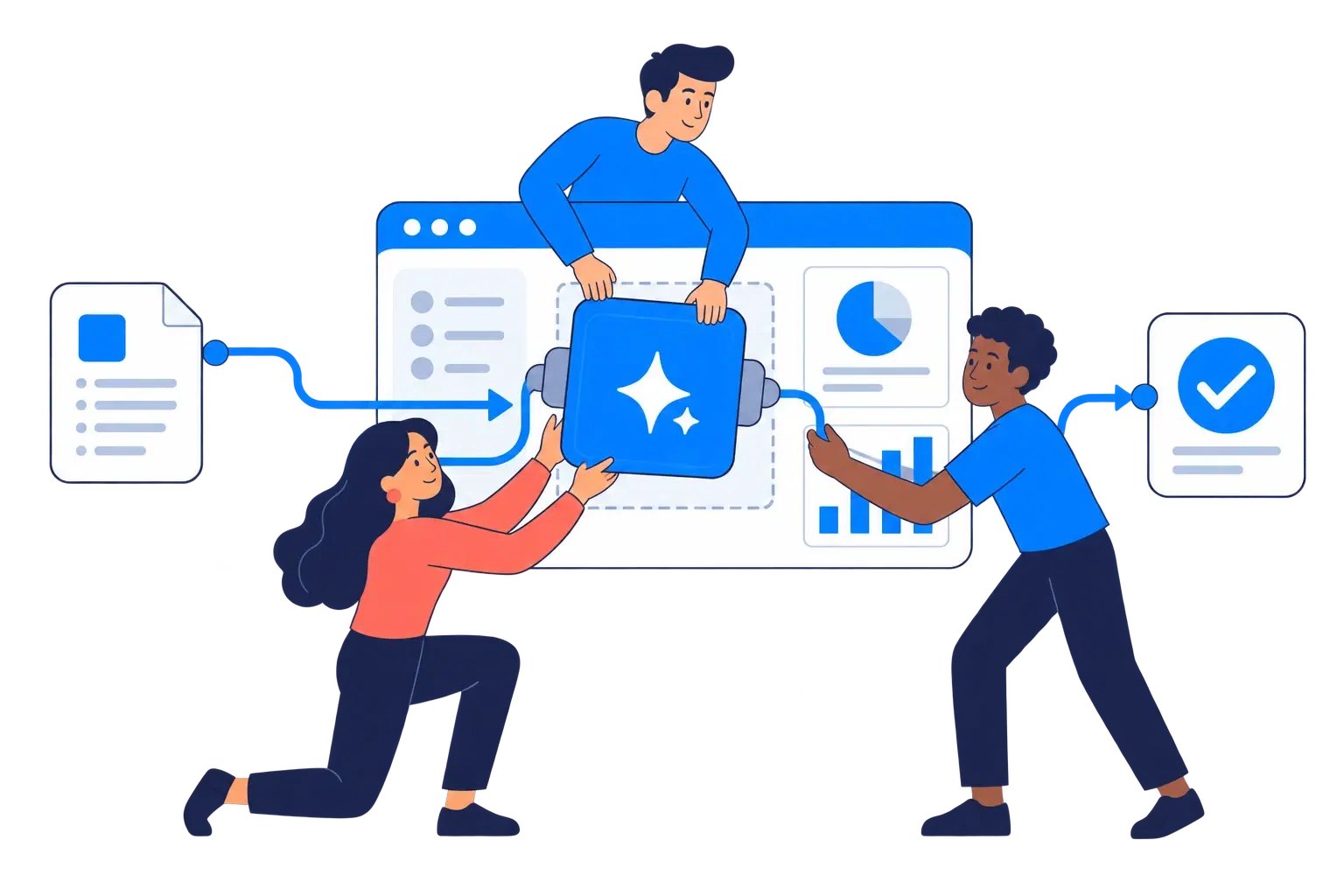
A feature supports the workflow. A system carries more of it.
Traditional software gave users better tools. AI lets the product take responsibility for parts of the workflow itself: analysis, decisions, coordination, content creation, validation, routing, and task completion. The product becomes stronger when AI is designed into the workflow, architecture, and core product logic from the start.
That requires product strategy, architecture, and senior engineering working from the same roadmap.
We define what the product should become, design the system behind it, and build production capabilities your team can own.
You work with people who can make product, architecture, and engineering trade-offs across the whole system.
We identify which workflows AI can take over, what should change in the product, and which roadmap makes sense by business impact and feasibility.
We design the target system before scaling delivery, so AI-native functionality has a stable technical foundation.
We build for maintainability, validation, documentation, handover, and long-term operation.
Your team keeps the knowledge, workflows, documentation, and system context needed to extend the product after delivery.
Strategy, architecture, and build stay with the same team, so context and decisions are not lost in handoffs.
A fully productized software factory is the long-term direction. Today we deliver the strategy-to-production path one engagement at a time.
Every product transformation starts from a different point. Some teams need AI-native product direction, some need architecture clarity, some need engineering capacity, and some need full-cycle delivery from roadmap to production. Our offers give you the right entry point today and connect into one path as the product evolves.

We define the AI-native product direction, map automation opportunities, and prioritize the roadmap by business impact, automation depth, and implementation feasibility.
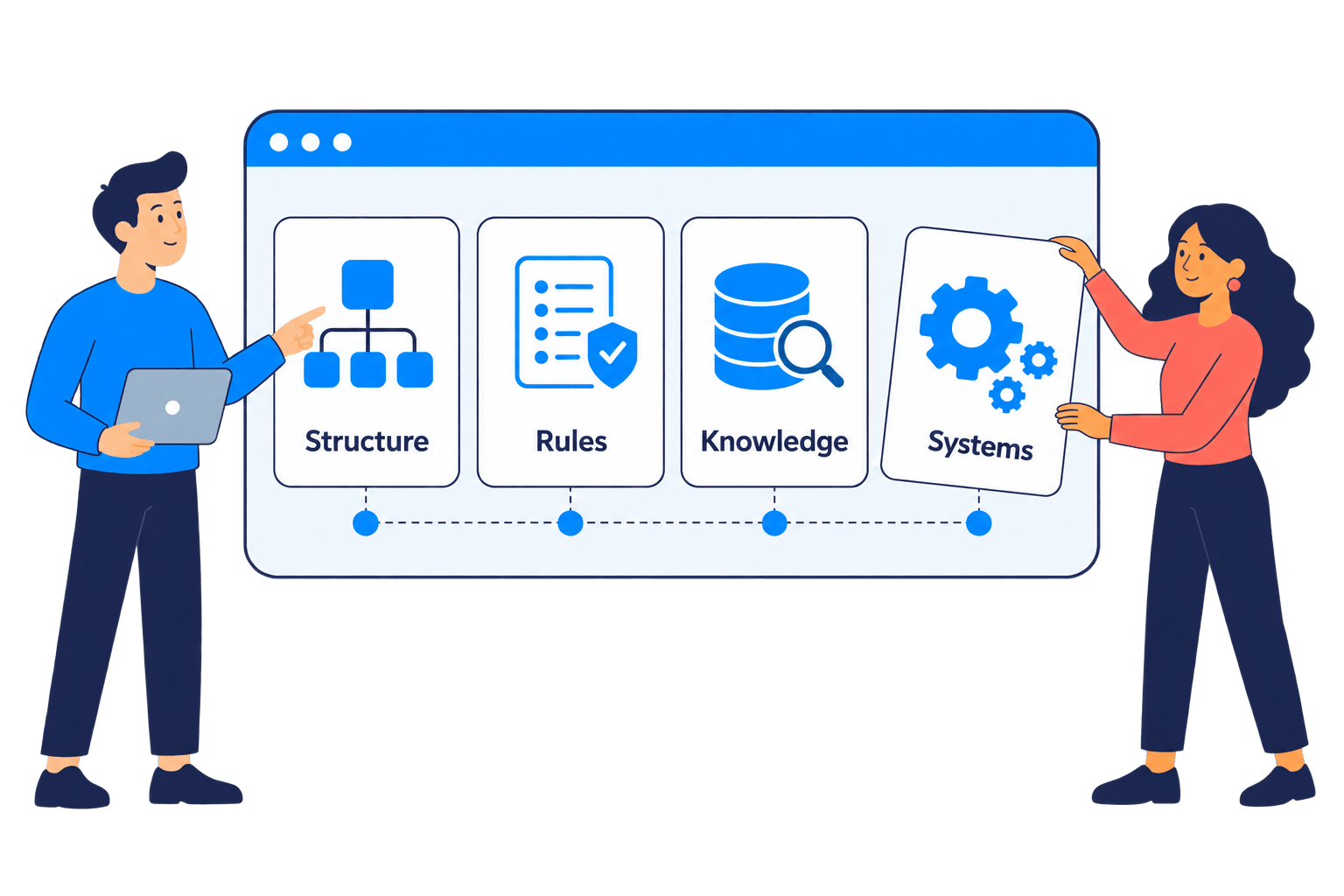
We turn expert knowledge, documentation, rules, processes, and systems into a verified domain model that product, architecture, engineering, and AI workflows can build from.
Map the DomainWe make current and target architecture visible, define the transformation path, and set the standards needed for scalable product evolution.
Map the ArchitectureWe provide architects, designers, developers, testers, and DevOps engineers who work inside your codebase, architecture, standards, and delivery process.
Add Engineering CapacityWe provide AI architects, developers, automation specialists, and testers who embed in your team and support production-ready AI work.
Add AI SpecialistsWe design, build, test, deploy, document, and hand over complex software systems through one full-cycle delivery team.
Hand Over DeliveryWe build AI components, agentic systems, RAG solutions, integrations, and human-in-the-loop workflows through one full-cycle AI delivery model.
Take AI to ProductionThe right engineering team creates more value when the product strategy is clear. The right AI tools create more impact when they change how the product works. The right prototype becomes useful when it is designed with a path to production.
Choosing where to add AI inside the current product.
Defining what the product can now take responsibility for.
Selecting tools, platforms, models, and frameworks.
Designing the product system, workflow logic, validation, and maintainability around them.
Filling roles with development hours.
Adding capacity that fits your architecture, standards, workflow, and product direction.
Creating a working demo or early proof.
Building production systems with documentation, governance, and ownership transfer.
When product direction, architecture, and delivery move together, product advantage becomes part of how the system works.
The goal is a product that creates stronger market position, not a longer feature list.
AI-native capabilities are harder to copy when they are built into workflow logic, architecture, and product behavior.
Priorities are sequenced by business impact, automation depth, and implementation feasibility.
AI-enabled workflows and senior execution increase what the same organization can build and maintain.
Architecture-led delivery reduces the risk of fragile AI layers, unclear ownership, and uncontrolled technical debt.
The strategy should make the investment logic clear before major build spend begins.
Leadership, product, architecture, and engineering teams work from one product direction and one implementation path.
Indicative planning view. Actual impact depends on product maturity, architecture complexity, documentation quality, and delivery scope.
Bring your product, roadmap, current AI ideas, and the workflows users still handle manually. We will discuss where AI can change the product, what a strategy engagement would cover, and which entry point fits your readiness. You will speak with an engineer, not a salesperson.